
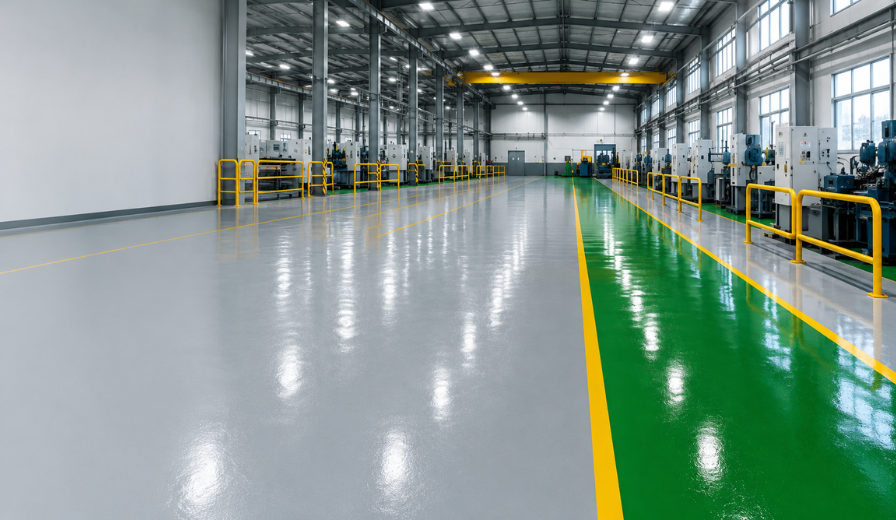
A factory floor does not usually make it into an investment decision until it starts affecting production.
Many industrial facilities still choose floor paints based on upfront cost primarily. However, this approach rarely works in the long term.
Ahead, we have discussed the best floor paint solutions and how different Factory Floor Paint systems perform under pressure. So, keep on reading till the end.
Why Factory Floors Fail Faster Than Expected
The industrial floors are exposed to conditions that normal floor paints cannot withstand. Consider these conditions on an average factory floor:
- Non-stop forklift activity
- Spillage of chemicals and cleaning fluids
- Vibration caused by heavy machinery
- Buildup of dust
- Wide variation in temperatures
- Loading/unloading activities
While a normal floor paint might look okay initially, its performance is a totally different issue. That’s where specialized floor paint for factory applications becomes essential.
Let’s check out the best floor paint solutions for factories.
Types of Industrial Factory Floor Paint Solutions
Not all industrial environments require the same coating system. The right choice depends on traffic, chemical exposure, and operational intensity.
1. Epoxy Floor Paint
If someone asks what the most versatile type of Industrial Floor Paint is. The first thing that comes to mind is an epoxy coating.
Epoxy coatings provide a tight seal on concrete and work very effectively in harsh conditions. It is best for:
- Manufacturing units
- Warehouses
- Food processing plants
- Chemical plants
- Automotive workshops
Advantages:-
✔ High abrasion resistance
✔ Chemical protection
✔ Easy cleaning
✔ Professional finish
✔ Long operational lifespan
For many industrial plants, epoxy floor paint is the first and only choice for its perfect balance between performance and investment.
2. Polyurethane Floor Coatings
Factories that deal with temperature changes often experience floor failure earlier. Polyurethane systems provide flexibility and better thermal shock resistance. Ideal for:
- Food manufacturing
- Cold storage
- Pharmaceutical units
- Processing facilities
Advantages:-
✔ UV stability
✔ Better flexibility
✔ Improved temperature tolerance
3. Methyl Methacrylate (MMA) Coatings
Coatings based on MMA (methyl methacrylate) are noted for their very rapid cure and short return-to-service times, which is why they are ideal for use in situations where downtime for coating activities cannot be tolerated. It is ideal for:
- Food and beverage facilities
- Logistics hubs
- Production units requiring rapid installation
- Industrial refurbishment projects
Advantage:-
- Very fast curing time
- Excellent abrasion resistance
- Strong chemical resistance
- Can be applied in lower temperatures
4. Heavy-Duty Factory Floor Coating Systems
But some industrial environments still demand more. Factories handling fabrication, logistics, chemicals, or continuous load movement often require factory floor coating renovation. That’s where multilayered heavy-duty factory floor coating solutions come in handy. They combine:
- Surface primer
- Build coat
- Protective topcoat
However, the result and cost are both greater than those of Epoxy and Polyurethane coatings.
5. Acrylic Coatings
An ultra-heavy-duty floor is not necessary for every factory environment.
There is also the acrylic coating that may be used to create a more economical and aesthetically pleasing floor for industrial sites with less heavy traffic and less chemical contact. It is best for:
- Light manufacturing units
- Storage areas
- Utility zones
- Low-traffic industrial spaces
Advantage:-
- Fast drying
- Cost-effective application
- Good UV resistance
- Easy maintenance and recoating
The Hidden Cost Nobody Talks About
Epoxy and Polyurethane floor coatings are two of the premium flooring solutions for factories. But your industrial floor coatings still get poor results even after spending a good amount on a premium solution.
Why?
Because coating failure often starts below the coating. So, before application, consider:
- Removal of dust and contamination
- Repair cracks and damaged units
- Ensure a controlled moisture level
- Use mechanical grinding or shot blasting where required
A ₹100 per sq ft epoxy coating applied poorly can perform worse than a ₹50 per sq ft coating installed correctly.
How to Choose the Right Floor Paint for Your Factory
People often choose the factory floor paint based on the price per square foot. However, they often ignore asking these questions:
- What type of traffic will the floor handle?
- Will chemicals be present?
- How old is the existing concrete?
- Is appearance important?
If these answers satisfy you, then choose the right floor paint for the industrial facility.
Additional Maintenance Tips to Extend Floor Life
Even premium flooring needs maintenance. Check out these practical habits that can make a measurable maintenance difference:
➜ Clean chemical spills immediately
➜ Use soft industrial cleaning tools
➜ Inspect high-traffic areas quarterly
➜ Recoat before visible substrate damage appears
Bottom Lines
Choosing the correct Factory Floor Paint can ensure more than just protecting concrete. It supports smoother process flow, fewer disruptions in maintenance, better workplace safety, and longer-lasting industrial infrastructure.
If you are still confused about which to choose, Epoxy Floor Paint, polyurethane systems, or MMA Coatings, let the professionals handle this.
Chanda Paints is one of India's most experienced floor coating manufacturers with 90+ years of expertise. Discuss your project with our professionals, and we will help you find a coating system built for long-term industrial performance.
FAQs
What is the best floor paint for factory floors?
The choice of floor paint for factories should be based on the operating environment. However, in most industrial settings, epoxy floor paint is the most effective because of its durability and resistance to chemicals. In cases where there are fluctuations in heat, polyurethane coatings would be more ideal.
How long does factory floor paint last?
The lifespan of factory floor paint depends on several factors, including floor preparation, traffic, exposure to chemicals, paint quality, and maintenance. Usually, a well-maintained factory floor paint can last from 5 to 15 years.
What is the difference between epoxy floor paint and polyurethane floor paint?
Epoxy floor paints indeed provide great strength, abrasion resistance, and chemical protection. These floor paints can be used in industrial conditions. However, polyurethane paints have superior flexibility because they resist changes in temperature and UV radiation.
Can factory floor paint withstand forklift and heavy machinery traffic?
Yes. Factory floor paint can easily withstand forklift and heavy machinery traffic only when the right industrial flooring system is applied. Epoxy is one of the best industrial flooring coatings, engineered to withstand forklifts and equipment traffic.
How much does factory floor painting cost in India?
The cost of factory floor painting will depend on various factors such as the condition of the floor, surface preparation, paint used, and the size of the area to be painted. You should evaluate the industrial site before estimating the final cost.
How do I prepare a concrete factory floor before painting?
Proper preparation includes floor cleaning, contamination, crack repair, loose particle removal, and moisture control, among other measures. Good floor preparation is key to successful floor coatings.
Is epoxy floor paint resistant to chemicals, oil, and industrial spills?
Yes. The epoxy floor paint is very resistant to oil, chemicals, grease, and other spills, hence its high use as flooring material in factories and manufacturing plants.
How long does factory floor paint take to dry and cure?
Drying and curing times for coatings may differ depending on the coating used and environmental conditions. The majority of coatings take only hours to dry initially, but require several days to fully cure.
Why is my factory floor paint peeling or cracking?
Peeling and cracking are usually a result of inadequate surface preparation, the presence of water, wrong choice of coating, incorrect application process, or too much mechanical strain. Sometimes, the installation process is equally important to the quality of the material used.
How often should factory floors be repainted?
There is no fixed time frame. The industrial floor needs to be checked periodically and recoated whenever there are signs of wear and tear. Recoating is generally cheaper than repairing the damage done