
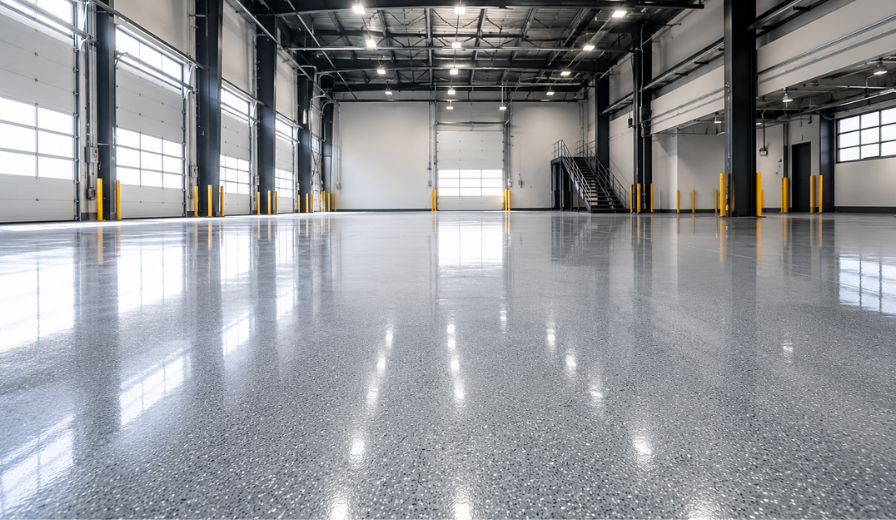
When you are building a factory, a manufacturing hub, or a chemical plant, you want the floor to be the strongest part of the foundation. Because often it is the first one that requires frequent maintenance.
That’s why epoxy floor coating has become one of the most reliable protective solutions for industrial and commercial surfaces.
But what is epoxy floor coating? And what are the exact reasons that make it the most preferred choice for factories, warehouses, hospitals, showrooms, and commercial facilities?
Let’s break it down!
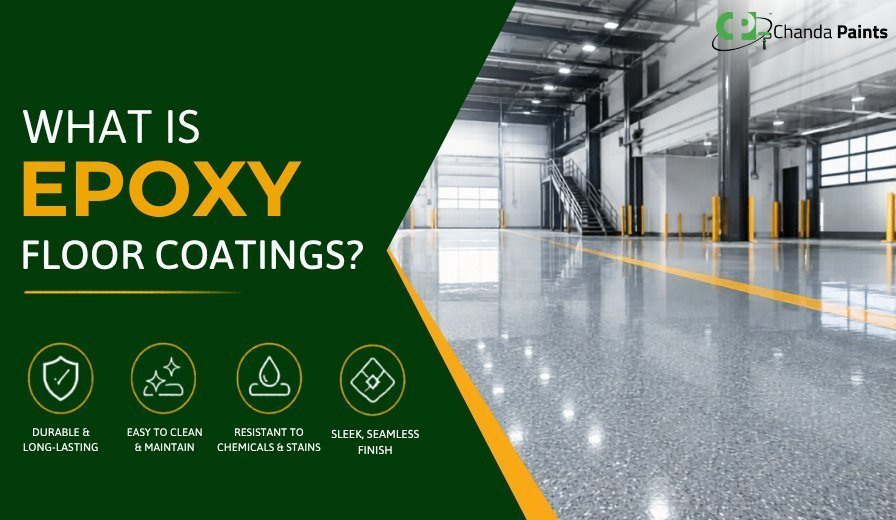
What Is Epoxy Floor Coating?
Epoxy Floor Coating is a durable floor coating made up of two components, epoxy resin and hardener. The interaction of the two results in the formation of a durable, seamless coating that bonds strongly to the concrete floor.
While floor paints just apply a coat of paint over the floor surface, epoxy makes use of an underlying layer, which makes it part of the floor system. This gives the floor coating strength and durability.
This is why epoxy is better than ordinary floor coatings.
How Does Epoxy Flooring Work?
Imagine concrete as a sponge. It is naturally absorbent to water, chemicals, oils, and dirt. If you leave it untreated, it will degrade much more quickly and be harder to maintain in the long term.
But epoxy acts like a protective layer. If applied properly, it forms a waterproof seal over the concrete and protects it from external factors like heat, chemical spills, pressure, and humidity.
Installation of Epoxy Floor Coatings
- Surface preparation
- Crack and defect repair
- Primer application
- Epoxy coating application
- Protective topcoat application
Note: Quality surface preparation before applying epoxy coatings often determines the lifespan of the entire flooring system. But if you are concerned about the cost, we have another complete guide on industrial epoxy flooring coating cost in India.
What Are the Epoxy Flooring Benefits That Ordinary Floors Can’t Deliver?
Exceptional Durability
Floorings of industrial areas are often subjected to abuse in any form. It could be the falling of tools, movement of pallets, or vibrations from machinery. Which means the flooring has to endure a lot of pressure.
Epoxy creates a hardened surface that can handle a lot of pressure without getting damaged quickly.
Chemical Resistance
Oils, solvents, acids, and cleaning chemicals are common substances found in factories and process plants. The use of an epoxy coating on floors protects against chemicals while making cleanup much easier.
Dust-Free Environment
Dust is formed on bare concrete, which can affect the performance of machinery, the quality of products, and the environment. However, epoxy coating of the floor makes sure that there is less dust production.
Lower Maintenance Costs
Lastly and most importantly, epoxy floor coating requires the lowest maintenance cost. This type of floor does not have any joints, thus making cleaning quite easy.
But epoxy floor coating & epoxy floor paints are not the same thing!
Epoxy Floor Paint vs Epoxy Floor Coating: Are They the Same?
This is a common confusion that most industry owners have.
Even though many brands market epoxy floor paint as epoxy coatings, they are not the same. Epoxy floor paint contains only a small percentage of epoxy and is primarily focused as a decorative paint for residential and some commercial plants.
However, for industrial floors, you need a stronger protective layer, like an epoxy floor coating, which contains specialized resin and hardener components. This compound chemically cures into a high-strength protective layer.
So, for residential garages, epoxy paint may be a good choice.
But for factories, warehouses, and commercial facilities, a professional-grade epoxy flooring system is usually the better long-term solution.
Is Epoxy Flooring Right for Your Facility?
If your facility experiences:
- Heavy foot traffic
- Forklift movement
- Chemical exposure
- Frequent cleaning requirements
- Dust control challenges
- High maintenance costs
Epoxy flooring is worth investing in as a proper surface protection.
Final Thoughts
Floors are generally noticed when issues occur. At such times, it is costly to carry out repairs and can disrupt activities.
A good-quality Epoxy Floor Coating system goes beyond merely protecting surfaces. It aids in creating a safe environment, clean surroundings, cost-effective maintenance, and durable structures.
Chanda Paints is a ISO certified epoxy floor coating manufacturer. We maintain the ideal flooring solution based on unique industrial needs. So, if you need a custom epoxy solution, get consultation from our experts.
FAQs
What is epoxy floor coating?
The epoxy floor coating is an extremely durable protection layer that is produced from the combination of epoxy resin and a curing agent. It is a very strong seamless layer applied to concrete floor surfaces.
Where is epoxy floor coating commonly used?
Epoxy flooring is a common choice for industrial plants, warehouses, logistics centers, pharmaceutical industries, food-processing plants, hospitals, office buildings, and automobile garages where strength and hygiene are of utmost importance.
What are the main benefits of epoxy floor coating?
The major advantages of epoxy floor coating are that it is highly durable, chemical-resistant, easy to maintain, and a dust control solution that improves safety and gives an attractive look to your floor.
Is epoxy floor coating suitable for warehouses?
Yes. Epoxy flooring is perfect for use in warehouses since it is durable enough to handle forklift traffic, abrasion, and general warehousing conditions, while at the same time looking professional.
How long does an epoxy floor coating last?
The service life of professionally applied epoxy floors can range from 10 to 25 years, based on several factors like wear and tear, maintenance procedures, and the quality of installation.
Is epoxy flooring resistant to chemicals and oil spills?
Yes. Epoxy flooring offers strong resistance to many chemicals, oils, solvents, and industrial fluids. This makes it a preferred flooring solution for factories, workshops, and processing facilities.
Can epoxy floor coating be applied over existing concrete floors?
Yes, epoxy floor coating can be applied over existing concrete floors, provided the surface is structurally sound, properly cleaned, repaired, and prepared to ensure strong adhesion.
What is the difference between epoxy flooring and regular floor paint?
Regular floor paints are primarily cosmetic, but epoxy floors provide a hard-wearing, chemically bonded finish. Epoxy provides superior longevity, hardness, and chemical resistance when compared to ordinary paints.
Is epoxy floor coating easy to maintain?
Yes. The seamless, non-porous surface of epoxy flooring prevents dirt, dust, and liquids from penetrating the floor, making cleaning and maintenance faster and more cost-effective.
Why do factories prefer epoxy floor coatings?
Factories prefer epoxy floor coatings due to their ability to withstand the weight of heavy machines, chemicals, and tough working conditions, besides decreasing maintenance costs and increasing safety.
Which industries benefit most from epoxy floor coatings?
Industries such as manufacturing, pharmaceuticals, food processing, automotive, logistics, warehousing, healthcare, electronics, and chemical processing benefit significantly from epoxy floor coating due to its durability and performance.