

Engineering & Fabrication
Product List
Edethane FN 311
- ( Polyurethane Finish )
- Mixing Ratio: 4:1
- Volume Solid: 42%
- D.F.T. per coat: 30 - 50
- T.S.R.: 14.0 - 8.4
Edethane FN ALI 312
- ( Polyurethane Finish )
- Mixing Ratio: 4:1
- Volume Solid: 0.45
- D.F.T. per coat: 30 - 50
- T.S.R.: 15.0 - 9.0

Thinner GP 951
- ( Thinners )
- Mixing Ratio:
- Volume Solid:
- D.F.T. per coat:
- T.S.R.:

Thinner Bitu 952
- ( Thinners )
- Mixing Ratio:
- Volume Solid:
- D.F.T. per coat:
- T.S.R.:

Thinner Epoxy 953
- ( Thinners )
- Mixing Ratio:
- Volume Solid:
- D.F.T. per coat:
- T.S.R.:

Thinner PU 954
- ( Thinners )
- Mixing Ratio:
- Volume Solid:
- D.F.T. per coat:
- T.S.R.:
Engineering & Fabrication Paints for Durable Industrial Protection
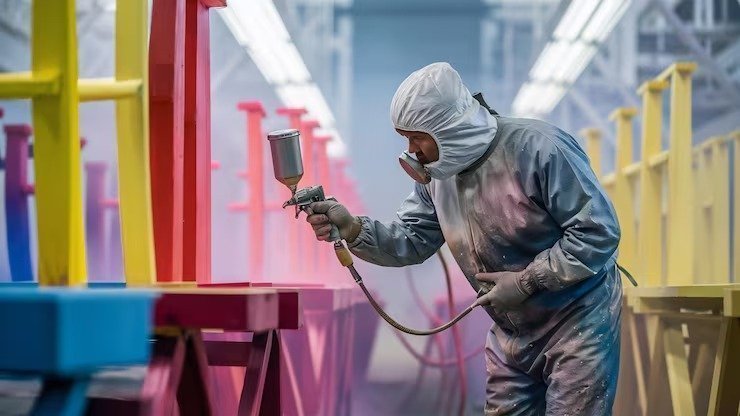
Engineering and fabrication projects demand coatings that do more than add finish. They must protect fabricated steel, industrial components, machinery, and structural surfaces from corrosion, chemicals, abrasion, and weather exposure. Chanda Paints delivers high-performance coating systems engineered for long-term durability, reliable adhesion, and consistent finish quality across demanding industrial environments. As a trusted Polyurethane Paints Manufacturer, we provide solutions built to enhance protection, performance, and service life across fabrication applications.
FAQs
1. What are engineering and fabrication paints?
Engineering and fabrication paints are industrial protective coatings designed for fabricated metal parts, steel structures, equipment, machinery, and engineered components. They help improve corrosion resistance, surface durability, and long-term performance.
2. Why are protective coatings essential in engineering and fabrication industries?
Protective coatings reduce corrosion, surface wear, moisture damage, and chemical exposure, extending the operational life of fabricated assets and reducing maintenance requirements.
3. Which paint is best for engineering and fabricated metal surfaces?
The ideal coating depends on the specific operating conditions. Epoxy primers, epoxy intermediate coatings, and polyurethane topcoats are some common preferences for high durability, adhesion, and finish retention in industrial environments.
4. What is the advantage of polyurethane coatings in fabrication applications?
Polyurethane coatings provide excellent UV stability, gloss retention, abrasion resistance, and weather protection, making them suitable for exposed industrial and fabricated surfaces.
5. How do I choose the right coating system for engineering projects?
You should select by considering several important factors like substrate type, environmental exposure, chemical resistance requirements, expected service life, application conditions, and maintenance cycles.
6. Can engineering fabrication paints prevent rust and corrosion?
Yes. Industrial coating systems create a protective barrier that helps reduce moisture penetration and limits corrosion on steel and metal surfaces.
7. Why choose a Polyurethane Paints Manufacturer for industrial fabrication coatings?
A specialized Polyurethane Paints Manufacturer offers coatings specially engineered for long-term weather resistance, mechanical durability, chemical protection, and consistent industrial performance across fabrication environments.
8. What industries commonly use engineering and fabrication coatings?
These coatings are widely used across construction, power, process industries, automotive components, steel fabrication, machinery manufacturing, and infrastructure sectors.
9. Can fabrication paints be customized for different industrial requirements?
Yes. Industrial coating systems can be tailored for corrosion resistance, finish appearance, chemical exposure, and performance requirements across different engineering applications