
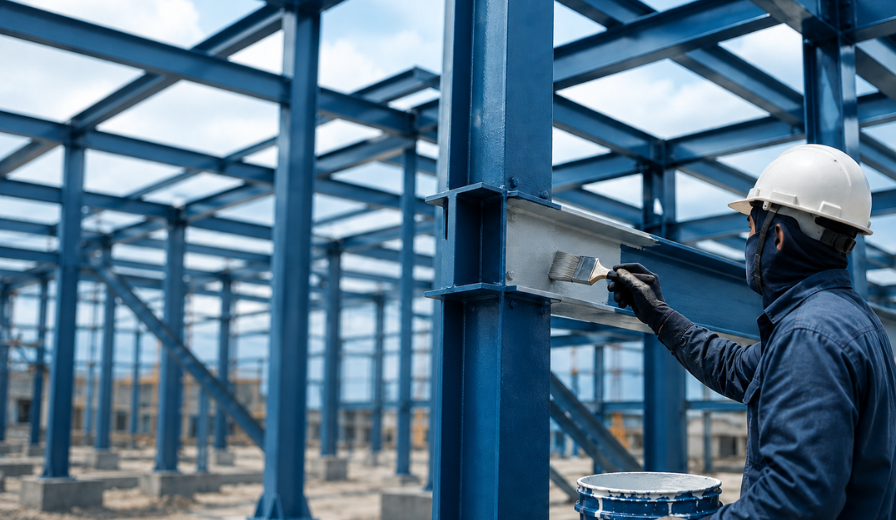
Painting a steel structure is not about aesthetics. It is about protecting the structure from water, chemicals, and years of exposure to humidity.
This is why experts consider steel structure paint one of the most critical investments in the life cycle of industrial assets. Whether it is a manufacturing plant, warehouse, refinery, power station, bridge, or commercial steel building, the right coating system adds decades of assurance to the structure’s lifespan.
Let’s understand what actually protects your steel structure and how you can choose the right coating.
Why Industrial Steel Structure Coating Is Different Than Ordinary Paint
Many industry owners assume that any metal paint can protect steel.
Unfortunately, not necessarily.
Industrial steel structures face extreme conditions that ordinary architectural paints were never designed to withstand. Constant vibration, temperature fluctuations, chemical exposure, abrasion, heavy rainfall, and UV radiation all attack the coating simultaneously.
This is why professional projects rely on a professional steel structure coating system that is specifically designed according to the operational environment.
What is Steel Structure Paint?
Paint for steel structures is an especially formulated painting system meant to protect steel from external harm.
While regular paints merely beautify a structure, these paints form a barrier between the metal and all elements of external harm like moisture, oxygen, UV radiation, and corrosive agents.
It takes more than one layer to form a full coating system.
Types of Protective Coating for Steel Structures
Epoxy Paint for Steel Structures
Among all industry coatings, epoxy paint for steel structures remains one of the most trusted solutions.
Epoxy coatings offer unmatched adhesion and chemical resistance. It creates a hard, durable film that bonds strongly with prepared steel surfaces. However, this coating is generally sensitive to prolonged UV exposure.
Zinc-Rich Primers for Steel Structure Corrosion Protection
Zinc-rich primers provide sacrificial protection.
The zinc metal coating gives sacrificial protection where the zinc metal layer gets corroded before the steel surface. This technology is employed on bridges, transmission towers, petrochemical plants, and offshore structures.
Polyurethane Topcoats for UV Resistance
The benefits associated with polyurethane paints include superb weatherability and color stability.
They shield the epoxy films from sunlight and ensure good gloss retention and weather resistance.
How to Choose the Right Anti Corrosion Paint for Steel Structures
A high-quality anti corrosion paint for steel structures directly affects structural reliability and maintenance cost.
But there isn’t one universal coating suitable for every project. The ideal system depends on several practical factors.
Surface Preparation
Surface preparation plays a critical role before the paint selection. Even the world’s best coating cannot perform on a poorly prepared surface.
Environmental Conditions
Different facilities in diverse parts of the region face distinct challenges. A warehouse in extremely humid conditions faces completely different challenges than a chemical plant in coastal areas.
Choose a paint for your steel structure based on humidity, rainfall, salinity, UV exposure, and industrial pollution. All these influence the coating selection.
Chemical Exposure
Coating resistance becomes very critical if steel is consistently exposed to oils, solvents, acids, alkalies, or process chemicals.
Maintenance Expectations
Some industries have enough budget for shutdowns and repainting.
Other industries, like power plants and factories, would prefer coatings that will last for 15-25 years with little maintenance.
Final Thoughts
Steel structures are a form of large capital investment, and therefore it is important to take care of them. Application of the correct steel structure painting system will ensure that there is proper protection from various factors.
If your facility depends on steel structures or you are a steel structure manufacturer, invest in the right coating today. Get a quote from the specialists at Chanda Paints & get a custom steel paint solution for your unique facility needs.
Frequently Asked Questions (FAQs)
What is the best steel structure paint for corrosion protection?
A suitable corrosion-resistant coating for the structural steel will be a multi-layered coating, which comprises a zinc-rich primer, an epoxy intermediate coating, and a polyurethane finish coating. This type of coating provides good protection against moisture, chemicals and exposure to UV rays.
Why is steel structure paint important for industrial buildings?
Paint on the steel structure serves as an effective coating that protects industrial structures from rust, corrosion, and chemical attacks. Paint increases the lifespan of the steel structure and helps in saving money in maintenance and repair costs.
How does steel structure paint prevent rust and corrosion?
Steel structure painting creates an extra layer of protection that keeps water or oxygen from accessing the steel material surface. Even salts and corrosive elements from accessing the steel material surface. Anti-corrosion paints specifically have improved adhesion properties and prevent the spread of corrosion under the coating.
Which type of paint is best for outdoor steel structures?
An epoxy primer coupled with a polyurethane topcoat is highly recommended for outdoor steel structures. Epoxy coating offers great corrosion resistance, whereas the polyurethane coating offers protection from sunlight, weather, and fading.
How long does steel structure paint last?
The life span of paint for steel structures will depend upon the type of paint used, environmental conditions, and the quality of its application. The life span of professional-grade industrial paint is usually between 10 and 20 years.
What surface preparation is required before painting steel structures?
Preparation of surfaces requires the removal of rust, oil, grease, dirt, old paint, and mill scale. It is advisable to use mechanical treatment or abrasive blasting to ensure proper surface profiling that leads to good coating adhesion.
Can epoxy paint be used on steel structures?
Yes. One of the most common industrial paints is epoxy paint, which can be used on steel structures since it is highly adhesive, durable, and protects from moisture and chemicals. When using epoxy paint outside, it is often covered with a UV-resistant polyurethane paint.
How often should steel structures be repainted?
Most industrial steel frameworks need to be repainted after 10 to 15 years, based on the environmental factors and condition of the paint used. Routine checks help detect any isolated problems that can be addressed prior to repainting the entire framework.
What factors should be considered when choosing steel structure paint?
Such factors include the environmental conditions, humidity, chemical contact, UV radiation, lifespan of the product, maintenance requirements, surface preparation technique, and coating system compatibility. Choosing the right coating material considering all these aspects is crucial to ensuring effective protection against corrosion.
What is the difference between anti-corrosion paint and regular steel paint?
Anti-rust paint has been specially developed for protecting steel from rust, moisture, chemical attacks, and extreme weather conditions, which makes it ideal for industrial purposes. Normal paint for steel is meant mostly for aesthetic purposes and only provides minimal protection; hence, it cannot be used in industrial areas.