
Based on our expertise in the paint & coatings manufacturing industry, we came across many contractors who save a lot by choosing the right tile adhesive. A few months ago, one contractor in Kolkata once saved ₹12 per square foot by choosing cement over tile adhesive.
But interestingly, six months later, half the tiles started sounding hollow… and within a year, replacement costs wiped out his savings.
But believe us, this is not at all a rare case. It is happening across sites where decisions are still driven by upfront cost instead of lifecycle thinking. So, if you are still comparing cement and tile adhesive only on price, you are missing the bigger picture.
Keep on reading till the end to find the real truth.
Ignore the Traditional Mindset That Cement Is Cheaper, So It Works
Walk into most construction sites in India, and you will hear this line: “Cement toh sasta hai, adhesive kyun use karein?”
On paper, it makes sense because cement costs less per bag, and it is familiar. But construction is not about what works today. It is about what holds up after handover.
Especially in cities like Kolkata, Delhi, Mumbai, and Hyderabad, where humidity, temperature shifts, and moisture exposure constantly test material performance.
Where Cement Actually Falls Short
Cement-based fixing relies heavily on thickness and manual skill. That is where the problem begins. Here’s why:
Inconsistent Bonding on Modern Tiles
Today’s tiles are larger, denser, and less porous. Cement struggles to grip them properly, especially vitrified and large-format tiles.
Higher Material Consumption
Cement requires a thicker bed. More material, more weight, more labor time. That cheap option starts getting expensive quietly over a year.
Moisture Sensitivity
In high-humidity environments, cement loses strength over time if not perfectly cured. And let’s be honest, perfect curing rarely happens on tight deadlines.
Why Tile Adhesive Is a Better Option
Don’t consider tile adhesive as just a replacement for cement. It is engineered for performance.
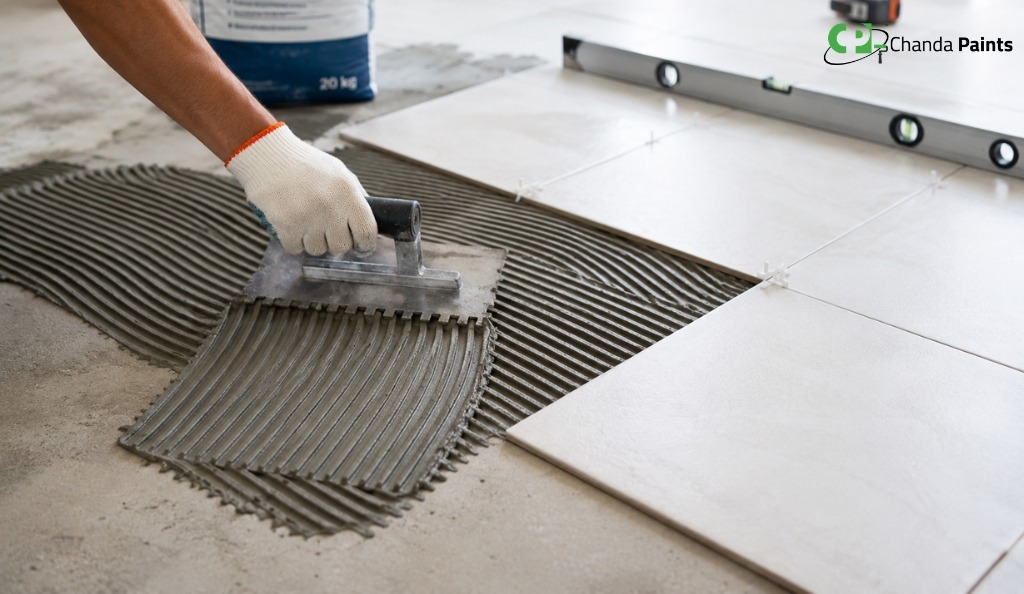
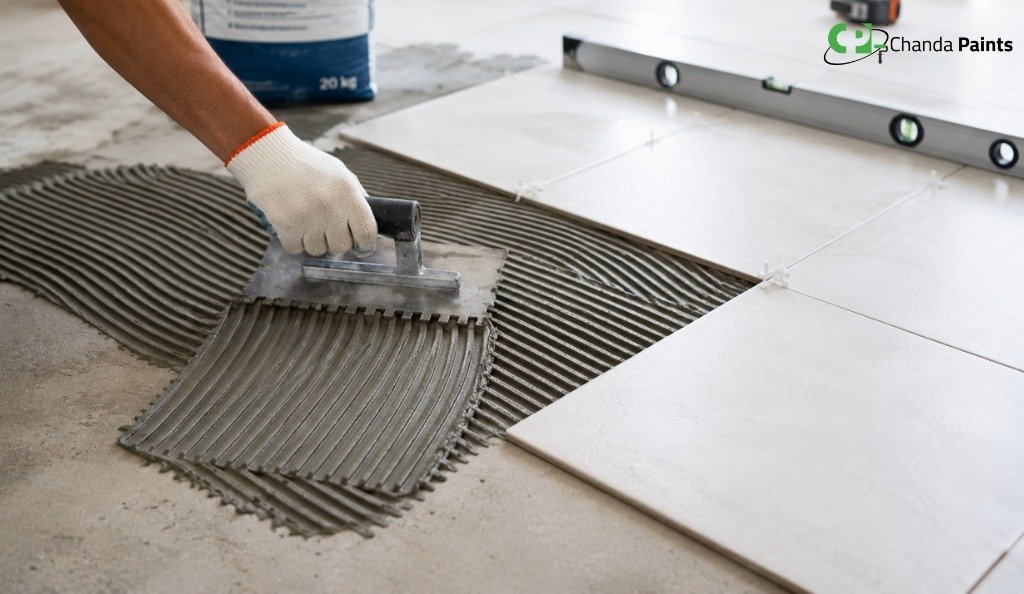
Even a good tile adhesive forms a thin, uniform layer that bonds chemically and mechanically with the surface. That means a stronger grip, less material, and fewer installation errors.
Why Contractors Are Shifting to Tile Adhesive in 2026
- Better bonding for modern tiles
- Faster application, less labor dependency
- Reduced the chances of hollow tiles and debonding
And most importantly, predictable performance. So why not?
The Real Cost Difference (That Most Contractors Ignore)
Here comes the real curiosity. Let’s break this down beyond just material price.
1. Material Cost vs Coverage
Cement looks cheaper per bag. But tile adhesive covers more area with less thickness. So the actual cost difference narrows significantly.
2. Labor Efficiency
Tile adhesive speeds up installation. Means less mixing, less thickness, less rework. On large projects, this directly impacts project timelines.
3. Failure and Rework Cost
This is where most contractors lose money. Hollow tiles, cracks, or detachment lead to:
- Tile replacement
- Labor rework
- Client dissatisfaction
And sometimes, loss of future contracts.
4. Long-Term Durability
A high-quality floor tile adhesive maintains bond strength for years. Cement? It depends heavily on execution quality, which is rarely consistent.
Real Site Scenario Based on Residential Project
A mid-size residential project switched to adhesive halfway through construction. The first phase used cement. The second phase used one of the best tile adhesive in India by Chanda Paints.
After one year, we analyzed that:
- The cement section showed visible hollow sounds in multiple areas
- The adhesive section remained intact with zero complaints
The developer didn’t just save on repairs. He avoided negative word-of-mouth, which matters more in local markets.
We only believe in reality, not in marketing.
The Hidden Cost Nobody Talks About
Here’s what most suppliers won’t tell you.
- Cement-based tiling increases structural stress over time.
- Thicker beds mean added dead load. On high-rise or large commercial projects, this compounds across floors.
- Tile adhesive reduces that load significantly. It is not just about tiles staying in place. It is about how your entire structure behaves long-term.
That is a conversation very few contractors are having.
So, Which One Should You Choose?
This analysis does not mean we are against the use of cement for tile fixing. We help you understand when you need cement and when you need tile adhesive.
If you are working on:
- Low-budget, temporary structures → Cement might still work
- High-value residential or commercial projects → Tile adhesive is the smarter investment
But if your goal is fewer callbacks, faster completion, and better client trust, the answer is already clear. Choosing the best tile adhesive is not an expense. It is a risk reduction strategy.
Final Thought
The industrial paint & coating market is evolving. Also, clients are more aware than ever, and their expectations are higher.
So, if you are serious about delivering durable, high-performance tile installations, it is time to upgrade your material choices.
Explore high-quality tile adhesive solutions at Chanda Paints. We also provide customized solutions based on individual industrial needs. So, get in touch with us today & choose products that match real site conditions, not just budgets.