
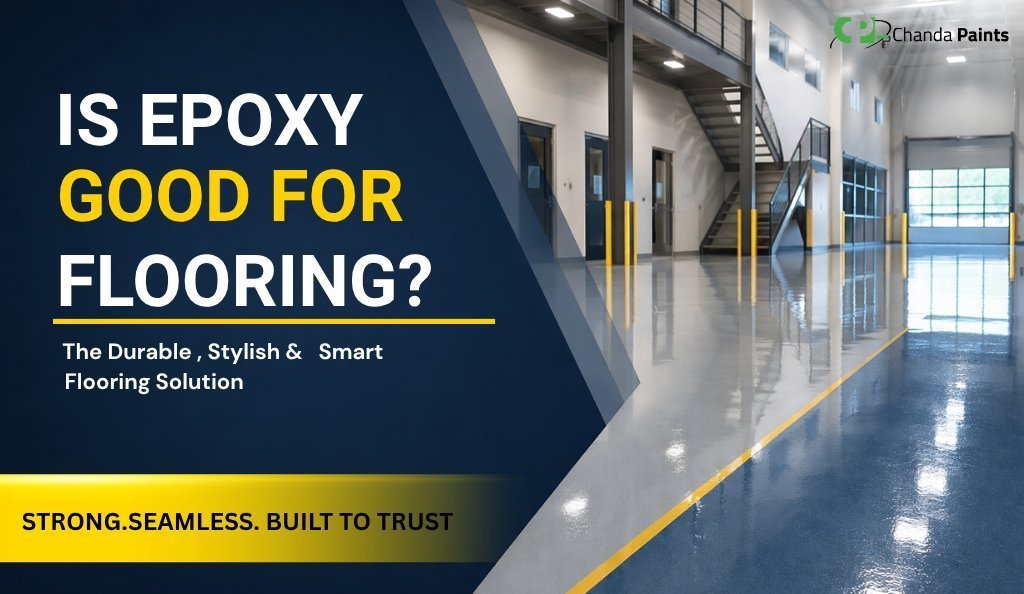
For factories, garages, showrooms, hospitals, warehouses, and industrial plants, the floor takes constant pressure. Heavy machinery, foot traffic, chemical spills, moisture, and heat impact… everything hits the surface first.
And suddenly, the flooring failure quietly starts to eat into profit. That’s exactly why epoxyflooring has become one of the most trusted flooring solutions across industries in India.
In this guide, we will share 10 reasons why Epoxy is good for flooring. So, let’s find out!
Reasons Why Epoxy Is Good for Industrial Flooring
1. Handles Heavy Traffic without Breaking Down
Industrial floors bear a great deal of pressure all day. The pressure exerted by forklift trucks, movements of pallets, vibrations from machinery, and contact with chemicals may render conventional concrete floors useless within a few months.
Industrial epoxy floor coating is engineered precisely to endure such abuse. Once you apply the floor, the industrial-grade epoxy coating makes the floor extremely durable compared to untreated concrete and ordinary tiles.
This is one of the biggest reasons why epoxy is gaining popularity as a flooring material in India.
2. Creates Seamless & Dust-Free Surface
The natural tendency for dust accumulation from concrete surfaces is inevitable. It creates big issues in industries that require clean surfaces, mainly the manufacture of pharmaceuticals, food production, electronics, and health care.
The epoxy top coat covers the whole surface of the concrete. The non-porous surface not only discourages dust formation but also ensures easy cleaning since it repels oil spills and chemical stains.
For businesses, trying to maintain hygiene standards, a glossy & smooth floor alone is a big advantage.
3. Chemical Resistance Formula Ideal for Industrial Use
A single chemical spill is enough to cause permanent harm to a normal floor.
Epoxy liquid flooring or epoxy flake floor is designed for use in areas where there are frequent chemical, oil, acid, and solvent spills. This is precisely why industrial epoxy coatings have gained popularity in industries such as automobiles, manufacturing, and engineering.
This not only makes the floor more resistant to chemicals and abrasions but also makes it easy to maintain. The design itself saves a lot of money.
Clearly, epoxyflooring is recommended by experts mainly because of its ability to minimize repairs.
4. Looks Glossy & Better than Traditional Flooring
There are still those who believe that epoxy floors belong exclusively to the industrial realm.
This is not true anymore.
Nowadays, you can find epoxy flooring systems that have a gloss finish, flat finish, decorative, metallic, or textured surface. There are numerous applications of epoxy flake floor systems that can be found in many garages, shopping centers, health clubs, and fancy private homes.
Suddenly, the floor becomes an important element of interior decoration. But once you see a neat epoxy-coated commercial space, perceptions will definitely change.
5. Epoxy Flooring Is Surprisingly Cost-Effective
Most business owners shy away from thinking epoxy is an expensive material.
The truth is that in most cases, the money saved will surpass the initial cost of installing epoxy. Epoxy has advantages over other materials, such as:
- Lower maintenance cost
- Frequent repairs become unnecessary
- Cleanliness is made easier
- Increased longevity of the surface
The epoxy floor cost per square foot varies depending on things like thickness, state of the flooring, and type of coating, among others. However, as far as money saving is concerned, epoxy ends up being the right choice.
6. Improves Workplace Safety
Slippery surfaces in industrial facilities are dangerous. Even one small accident caused by an oil leak may result in harm, production stoppage, or other problems for the facility. Anti-slip epoxy floor coatings prevent slips without interfering with cleaning capabilities.
There are even reflective floor coatings that enhance visibility in plants. There are different types of epoxy floor coatings available depending on industrial safety requirements.
7. Moisture Protection Extends Floor Life
The weather in India can really take its toll on concrete. Exposure to humidity, seepage, and changing temperatures can gradually wear down your bare floors, resulting in cracks and deterioration.
But epoxy forms an impermeable layer. By combining it with the right epoxy coating primer and top coat, you create a barrier that will prevent water from penetrating through your concrete.
This is crucial in warehouses, parking lots, basements, and industrial spaces.
8. Residential & Industrial Epoxy Flooring Is Growing Fast
Not only for industries, but epoxy coatings are also great for residential projects.
Residential contractors or promoters are now using epoxy floors in their garage areas, kitchen areas, basement areas, balconies, and even in living areas.
Why?
Because it brings beauty and functionality together. However, the residential epoxy flooring cost can be different from that of industrial epoxy flooring.
With the use of tiles having gaps between them that collect dust, epoxy makes it possible to achieve a clean and modern look that is easier to take care of. Epoxy with metallic and decorative flakes is now popular in luxury homes.
9. Faster Installation Means Less Downtime
For companies, downtime means losing cash.
But not with epoxy. You can install epoxy floors a lot faster than traditional flooring while requiring less reconstruction.
You can coat the surface effectively without causing much disruption to operations.
10. Increases Long-Term Property Value
Properly maintained floors affect the perception of any property.
With the floor clean, polished, and professionally done, you will immediately create a more positive impression on your clients, your customers, your inspector, and perhaps even potential buyers.
In commercial and industrial facilities, a good floor means business is being conducted professionally. That's why epoxy floor coating not only provides for flooring but also serves as an indicator of infrastructure quality.
Why Businesses Across India Trust Chanda Paints
Chanda Paints has been serving the industrial paints and coating manufacturing industry for the last 90 years. Our experts understand that flooring is more than just surface protection. It impacts the safety, maintenance, appearance, and operational efficiency.
Our industrial epoxy flooring solutions are designed for Indian industrial conditions and custom-made for factories, warehouses, commercial spaces, and residential applications. Industry businesses not only trust us for the high-quality coatings but also because we help them choose solutions that actually last.
So, if you are planning a flooring upgrade or a new project about to begin, connect with us to manufacture custom solutions tailored to your industrial needs.
FAQs
Is epoxy 100% waterproof?
The main benefit of the epoxy floor coating is that it is highly water-resistant. Nevertheless, if it is not installed correctly, water problems will occur due to cracks under the coating.
Which epoxy brand is best?
The selection of the best epoxy flooring product may depend on the area where you plan to use it. In case you need industrial-grade materials, choose products from reliable companies.
What are the disadvantages of epoxy floors?
Epoxy floors can be slippery when wet, need to be installed by professionals, and they tend to peel if applied under humid conditions. So, only quality assured products applied by professionals ensure the best epoxy flooring results.
How long will epoxy flooring last?
A good-quality epoxy floor can last anywhere between 10 and 20 years, depending on traffic, maintenance, and usage conditions.
Can epoxy hold weight?
Yes. Industrial epoxy floorings are created with durability in mind, such that they will withstand the weight of industrial machines without getting damaged.
How much does it cost to epoxy a floor of 2000 square feet?
The cost usually depends on coating thickness, floor condition, and design type. On average, epoxy flooring for 2000 sq ft can range from moderate to premium pricing based on industrial or decorative requirements.
How much does it cost to epoxy a 12x12 room?
For a standard 12x12 room, epoxy flooring cost generally varies based on finish quality, surface preparation, and coating type. Decorative finishes cost more than basic coatings.
Is epoxy flooring more costly than tiles?
Though epoxy may at first cost around the same or even more than tiles, it tends to be cheaper overall due to reduced maintenance and greater durability.
Is an epoxy floor cheaper than tile or concrete?
While compared to superior tiles, the epoxy option turns out to be the cheaper one, the comparison between the epoxy floor and regular concrete yields the opposite conclusion.
What is better than epoxy for floors?
If your intended application involves the worst cases of industrial use or the worst UV exposure, then polyurethane or polished concrete may be better. In general, however, epoxy is still one of the best available.
Are epoxy floors slippery?
They can be slippery when wet, especially glossy finishes. Anti-slip additives and textured coatings are commonly used to improve safety.
Is epoxy anti-fungal?
Epoxy flooring prevents fungi and bacteria from growing simply because of its impermeable nature